

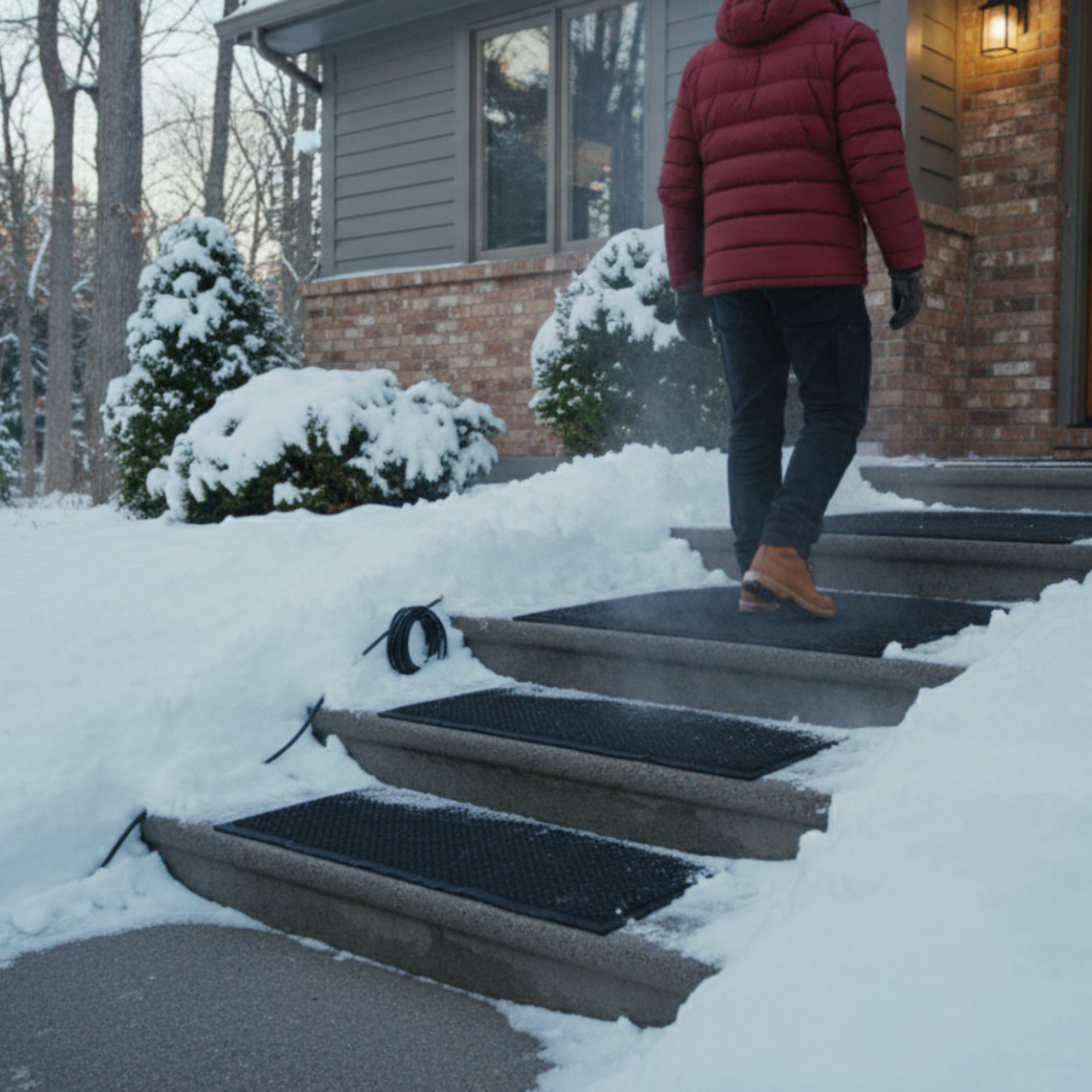


Winter brings cozy nights, warm drinks, and a whole lot of shoveling. For many homeowners, icy steps and snow-packed walkways are more than just an inconvenience—they’re a major safety hazard. Slips, falls, and concrete damage all stem from the same winter culprit: unmanaged snow and ice buildup. That’s where snow melting mats step in as a practical, hands-free solution. If you’ve ever wondered whether heated walkway mats are truly worth the investment, this guide breaks down everything you need to know before installing them around your home.
What You’ll Learn in This Guide
-
How snow melting mats work and what makes them effective
-
The advantages for homeowners compared to shoveling or ice melt
-
Different types of mats and where to use them
-
What impacts durability and performance
-
Energy usage and cost considerations
-
Installation and maintenance made simple
How Snow Melting Mats Work: The Science Behind the Heat
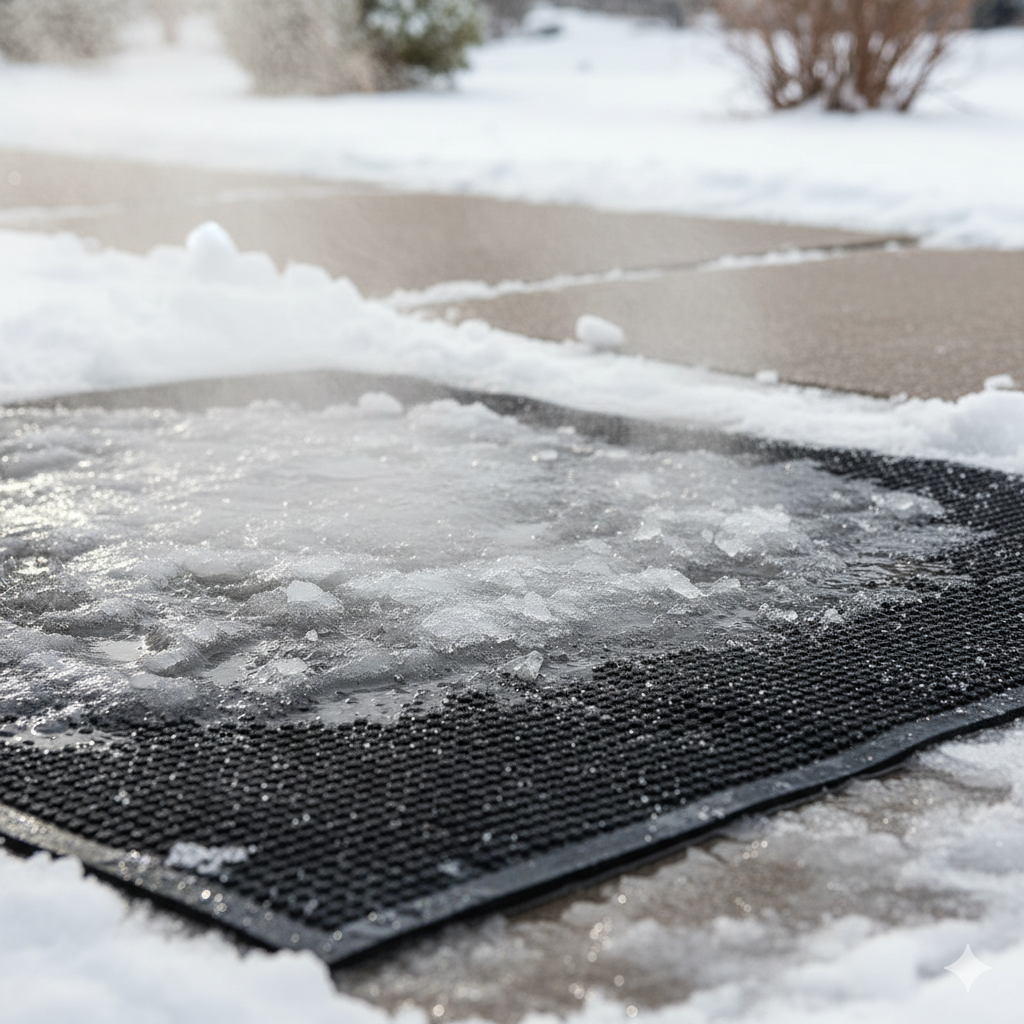
Snow melting mats use built-in heating elements that warm up when plugged in or connected to an activated power source. The heat radiates evenly across the mat surface, melting snow on contact and preventing ice formation. Unlike salt or chemicals that only work after spreading—and often damage surfaces—these mats offer continuous protection without any manual labor.
Many mats also come with:
-
Weatherproof construction
-
Non-slip surfaces
-
Automatic temperature sensors
-
Energy-efficient heating cables
For homeowners dealing with repeated snowstorms, having mats that turn themselves on and off as temperatures fluctuate offers unmatched convenience.
The Biggest Benefits of Snow Melting Mats for Homeowners
1. Major Slip Prevention
Icy walkways and stairs are among the leading causes of winter injuries. Snow melting mats continuously melt accumulating snow, preventing slippery surfaces and keeping your paths safer—especially important for seniors, children, or those with limited mobility.
2. No More Early-Morning Shoveling
Imagine waking up to a cleared path without lifting a shovel. Heated mats drastically reduce the need for manual snow removal, giving you one less winter chore to worry about.
3. Protects Your Concrete and Decking
Repeated use of ice melt chemicals can weaken concrete, eat away at sealants, and discolor wood. Snow melting mats eliminate salt use and help preserve surfaces long-term.
4. Energy-Efficient Winter Maintenance
Modern heated walkway mats are designed to use energy efficiently, emitting consistent, low-level heat that keeps snow from bonding to surfaces. Since many are thermostatically controlled, they activate only when necessary.
5. Long-Term Savings
While the upfront cost may seem higher than buying a bag of salt, the long-term financial benefits include:
-
Reduced concrete repair
-
Less deck maintenance
-
Lower risk of injury-related expenses
-
No need for constant de-icing product purchases
When considering overall safety and convenience, heated mats often pay for themselves over several winter seasons.
Where to Use Snow Melting Mats Around Your Home
Every home has winter “hot spots” where ice builds up quickly. Here are the most popular locations where homeowners install heated mats:
Walkways & Entry Paths
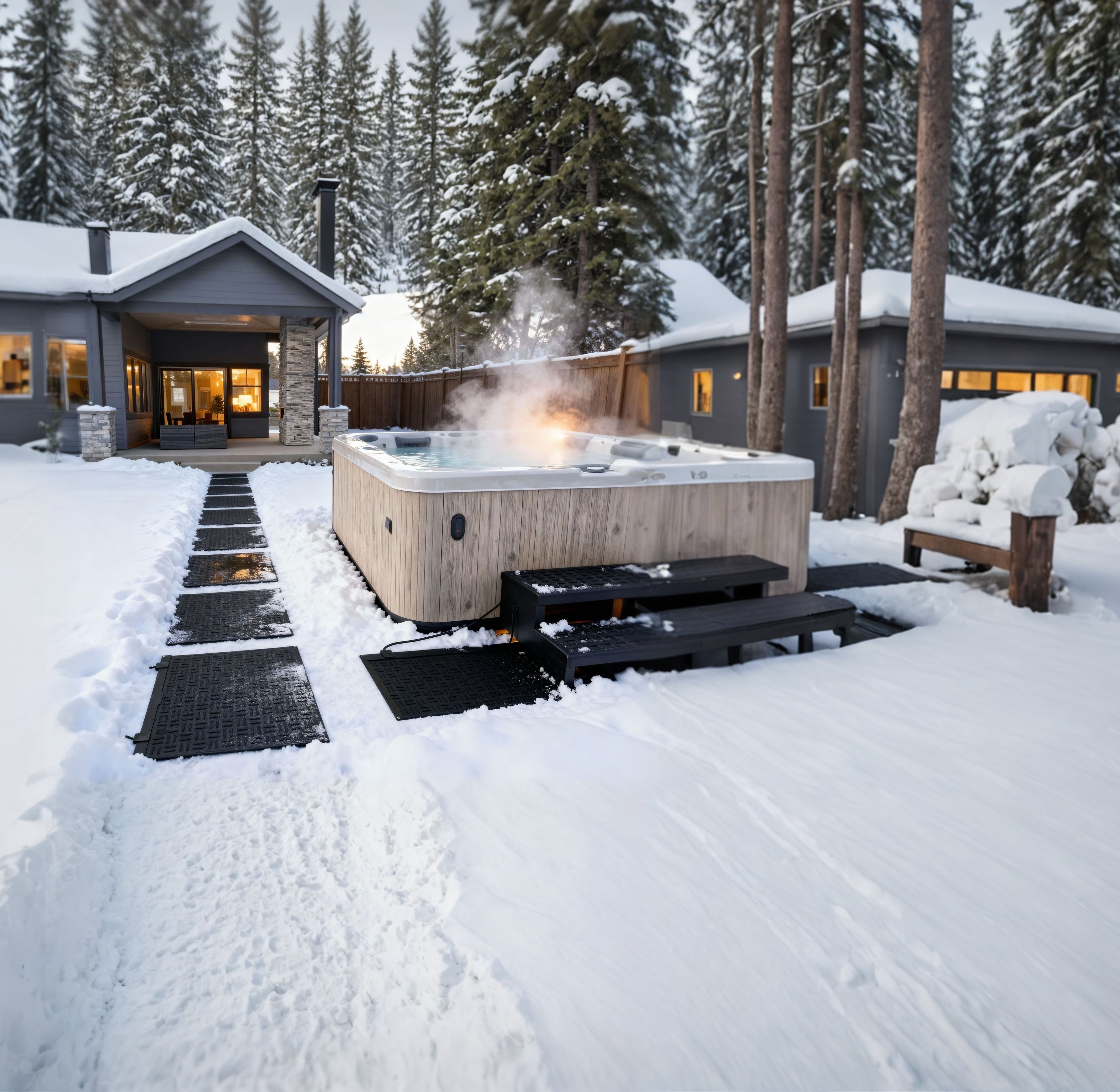
The front entrance is often the most walked-on surface and the most dangerous when icy. A connected series of walkway mats can create a fully heated path from your driveway to your doorstep.
Front Steps & Back Porch Stairs
Stairs are especially risky in winter. Heated stair mats provide individual heating strips for each step to reduce slipping.
Decks & Wooden Patios
Wooden and composite decks are vulnerable to moisture absorption, freezing, and surface damage. Specialty mats—like snow melting mats for deck—are designed to protect the wood while keeping the surface safe and ice-free.
Garage Entrances
Melting mats placed just outside the garage stop snow from sticking to the surface and prevent sheets of ice from forming where vehicles enter and exit.
What Affects the Durability of Snow Melting Mats?
Not all mats are created equal. Several key features determine how long your heated mats will last:
Construction Material
High-quality mats use tough, reinforced rubber or thermoplastic materials that resist cracking and moisture infiltration. Cheap mats often split or warp after a few freeze–thaw cycles.
Heating Element Quality
Premium mats contain evenly distributed heating cables, preventing cold spots and ensuring consistent performance.
Weather Resistance
Look for:
-
UV resistance
-
Moisture sealing
-
Heavy-duty connectors
-
High IP ratings
The more harsh-weather elements a mat can withstand, the longer it will serve you each winter.
Usage & Storage
Rolling, storing, and cleaning your mats properly helps extend lifespan. Clean them at the end of the season and store in a dry place to keep wires and surfaces in optimal condition.
Energy Use & Operating Costs: What to Expect
Energy usage varies depending on:
-
Mat size
-
Watt density
-
Operating hours
-
Regional winter climate
Most mats use roughly the energy of a small household appliance. However, thermostatic models that turn on only during freezing temperatures can offer significant energy savings. Since operating costs depend on local electricity rates and storm frequency, homeowners are encouraged to check with the manufacturer for wattage specifications and estimate usage based on local conditions.
Installation: Easier Than You Think
One of the biggest advantages of snow melting mats is the simple installation:
-
Unroll the mat onto your walkway, stairs, or deck.
-
Plug into a GFCI outlet using outdoor-rated connectors.
-
Optional: Connect multiple mats using built-in linking cables.
-
Secure the cords along edges or railings to keep walkways clear.
Unlike in-ground heating systems, no construction, digging, or electrician work is required unless you're adding new outdoor outlets.
Maintenance Tips to Extend the Life of Your Mats
Keeping snow melting mats in good shape is easy:
-
Avoid using metal shovels on top of them
-
Brush off dirt or debris regularly
-
Inspect cords and connectors each season
-
Store them loosely rolled, never folded
-
Clean with mild soap—no harsh chemicals
Well-maintained mats often last several years, offering consistent performance winter after winter.
Are Snow Melting Mats Worth It for Homeowners?
For most homeowners, yes—snow melting mats are absolutely worth it. They provide safety, convenience, and long-term protection for walkways, decks, and steps. By preventing slips, eliminating constant shoveling, and reducing damage to outdoor surfaces, heated mats make winter much more manageable. If you're looking for a hands-free winter solution that keeps your home safer and your surfaces protected, snow melting mats are a smart investment that pays off year after year.

Leave a comment
This site is protected by hCaptcha and the hCaptcha Privacy Policy and Terms of Service apply.