

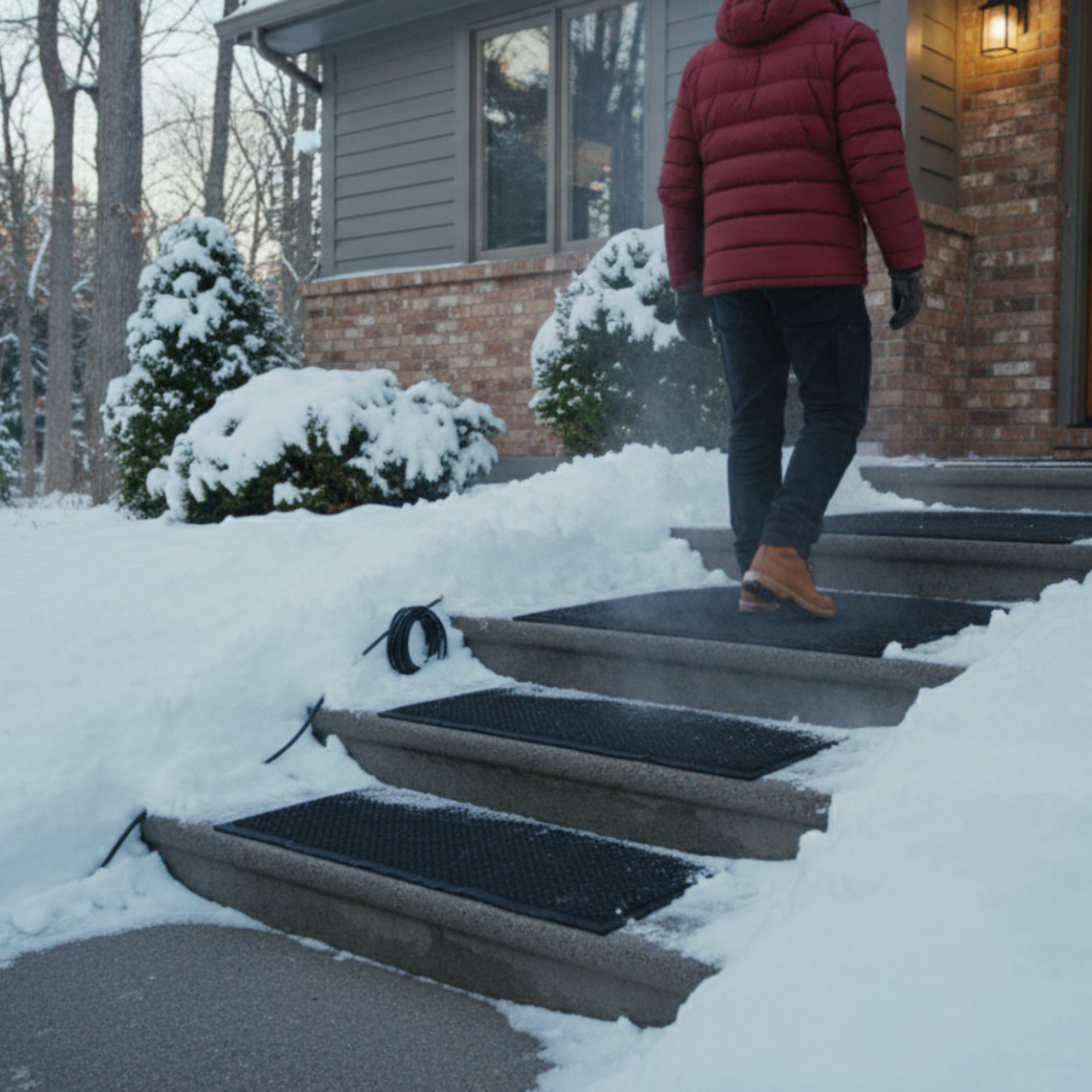


Slip-and-fall accidents are one of the most common and costly winter hazards for homeowners, businesses, and property managers. Snow and ice don’t just make surfaces inconvenient—they create unpredictable conditions that can lead to serious injuries, property liability, and long-term consequences. While shoveling and de-icing are traditional responses, they often fall short when it comes to consistent, reliable prevention.
Snow melting mats offer a different approach. Instead of reacting to ice after it forms, they help prevent dangerous conditions from developing in the first place. Understanding how and why slip-and-fall accidents happen in winter helps explain why proactive solutions like heated mats are becoming an important part of modern winter safety planning.
Why Winter Slip-and-Fall Accidents Are So Common
Winter creates a unique set of challenges for walking surfaces. Snow doesn’t behave consistently, and ice often forms in ways that are difficult to predict or see.
Common contributors to winter slips and falls include:
-
Thin layers of black ice
-
Snow compacted by foot traffic
-
Meltwater refreezing overnight
-
Uneven clearing from shoveling
-
Slippery residues from de-icing chemicals
Even when surfaces appear safe, they can change quickly with minor temperature shifts.
The Hidden Dangers of “Mostly Clear” Surfaces
Many winter accidents happen not during heavy snowfall, but when surfaces look mostly clear. A thin film of ice left behind after shoveling or partial melting can be more dangerous than visible snow because people are less cautious.
This is especially true in:
-
Entryways
-
Stair treads
-
Ramps
-
Landings and thresholds
Snow melting mats address this risk by maintaining consistent surface temperatures that prevent refreezing.
How Snow Melting Mats Reduce Slip Risks
Snow melting mats work by delivering controlled heat to walking surfaces, keeping them above freezing. This prevents snow from accumulating and stops meltwater from turning into ice.
By maintaining a stable surface, heated mats:
-
Eliminate icy patches
-
Reduce wet, slippery conditions
-
Improve traction consistency
-
Minimize sudden surface changes
This proactive control significantly lowers the likelihood of unexpected slips.
Traction Matters as Much as Heat
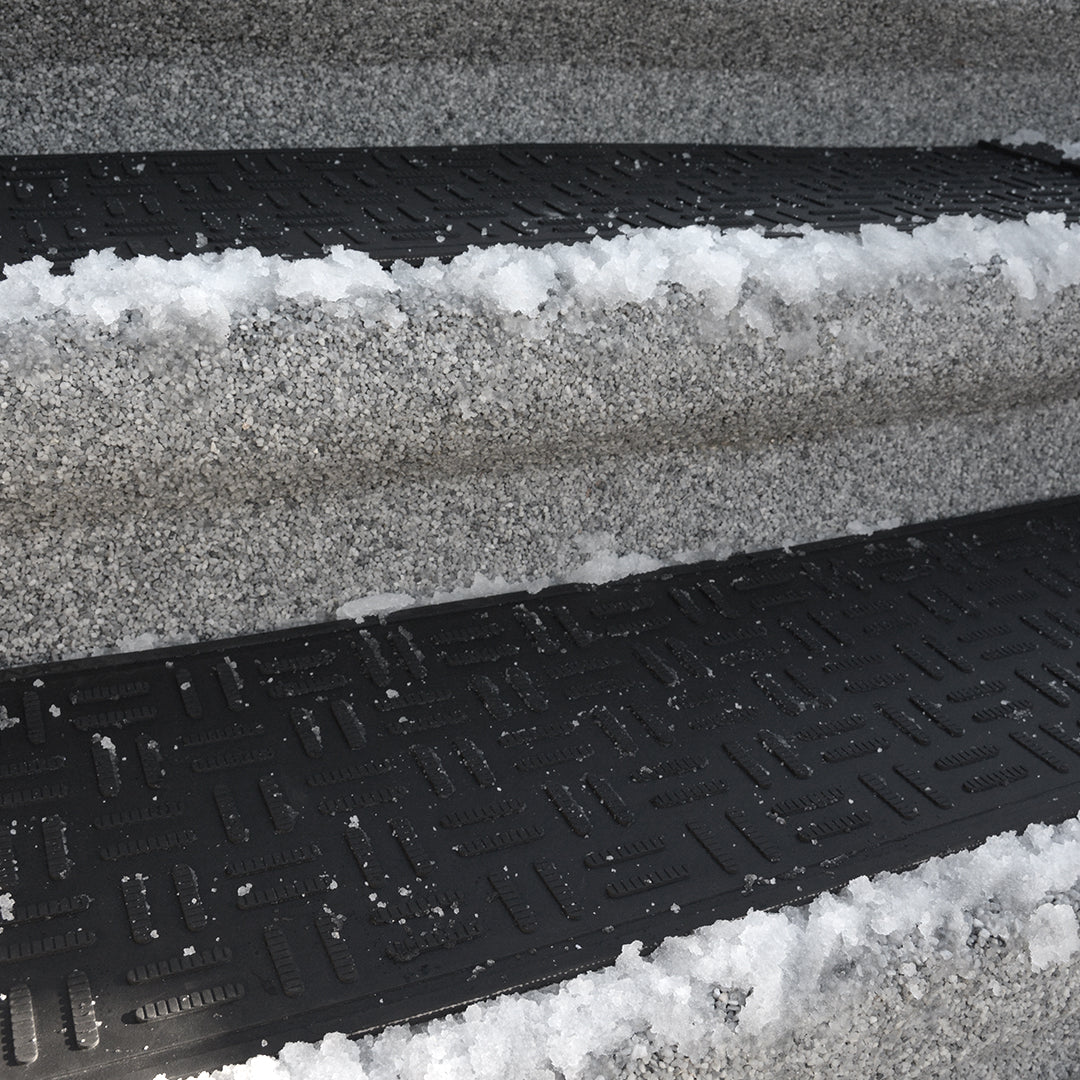
Heat alone isn’t enough to prevent falls. Surface texture plays a critical role in winter safety. High-quality snow melting mats are designed with textured, slip-resistant surfaces that provide grip even when wet.
This combination of heat and traction:
-
Keeps surfaces dry faster
-
Reduces slipping from smooth ice films
-
Improves stability during foot placement
The result is a walking surface that feels predictable and secure.
Stairs: One of the Highest-Risk Areas
Stairs are particularly dangerous in winter because each step presents a potential slipping point. Ice often forms unevenly on stair edges, making balance difficult.
Snow melting mats placed on steps:
-
Keep each tread clear
-
Prevent ice buildup on edges
-
Improve visual clarity of each step
This is especially important for elderly individuals and anyone carrying items that affect balance.
Entryways and Transition Zones
Slip-and-fall accidents frequently occur at transition points—where people move from outdoor to indoor environments. Snow melts off footwear and refreezes quickly, creating slick zones right at doorways.
Heated mats positioned at entrances:
-
Melt snow from boots before entry
-
Reduce moisture tracked indoors
-
Lower slip risks on interior flooring
This improves safety on both sides of the door.
Ramps and Accessibility Routes
Ramps require extra attention because even small amounts of ice can make them unusable. For individuals using mobility aids, icy ramps pose a serious hazard.
Snow melting mats help keep ramps safe by:
-
Preventing ice formation on slopes
-
Maintaining consistent traction
-
Supporting safer, uninterrupted access
Because ramps are difficult to shovel thoroughly without causing damage, heated mats offer a controlled alternative.
Reducing Liability for Property Owners and Businesses
Slip-and-fall incidents are a major source of liability claims in winter. Even with regular maintenance, proving consistent safety can be challenging when weather conditions change rapidly.
Snow melting mats help reduce liability by:
-
Providing continuous surface management
-
Reducing reliance on manual clearing
-
Demonstrating proactive safety measures
For businesses, this consistency is critical during operating hours when foot traffic is constant.
The Limitations of Shoveling and De-Icing
Shoveling and chemical de-icers are reactive solutions. They address snow after it has already created a hazard.
Common limitations include:
-
Inconsistent clearing
-
Physical strain on workers or residents
-
Surface damage from metal tools
-
Environmental and pet safety concerns
Even when used diligently, these methods often leave behind conditions that contribute to slips.
Consistency During Temperature Fluctuations
One of the most dangerous winter conditions is repeated freezing and thawing. Snow melts during the day and refreezes at night, creating ice that’s difficult to see and remove.
Snow melting mats counter this cycle by:
-
Maintaining steady surface warmth
-
Preventing overnight refreezing
-
Reducing the need for repeated treatments
This stability is key to long-term winter safety.
Indoor Safety Benefits
Slip risks don’t stop at the door. Wet footwear creates slick indoor floors, especially on tile, stone, or polished concrete.
By melting snow before it enters the building, heated mats:
-
Reduce indoor water accumulation
-
Lower cleaning requirements
-
Improve overall floor safety
This is particularly beneficial in high-traffic environments.
Protecting Vulnerable Individuals
Children, seniors, and individuals with limited mobility face higher risks during winter conditions. A single slip can result in serious injury or long recovery times.
Snow melting mats help protect these groups by:
-
Reducing unexpected ice
-
Creating predictable walking surfaces
-
Supporting safer daily movement
This added layer of safety can make a meaningful difference in everyday winter routines.
Seasonal Flexibility Without Permanent Changes
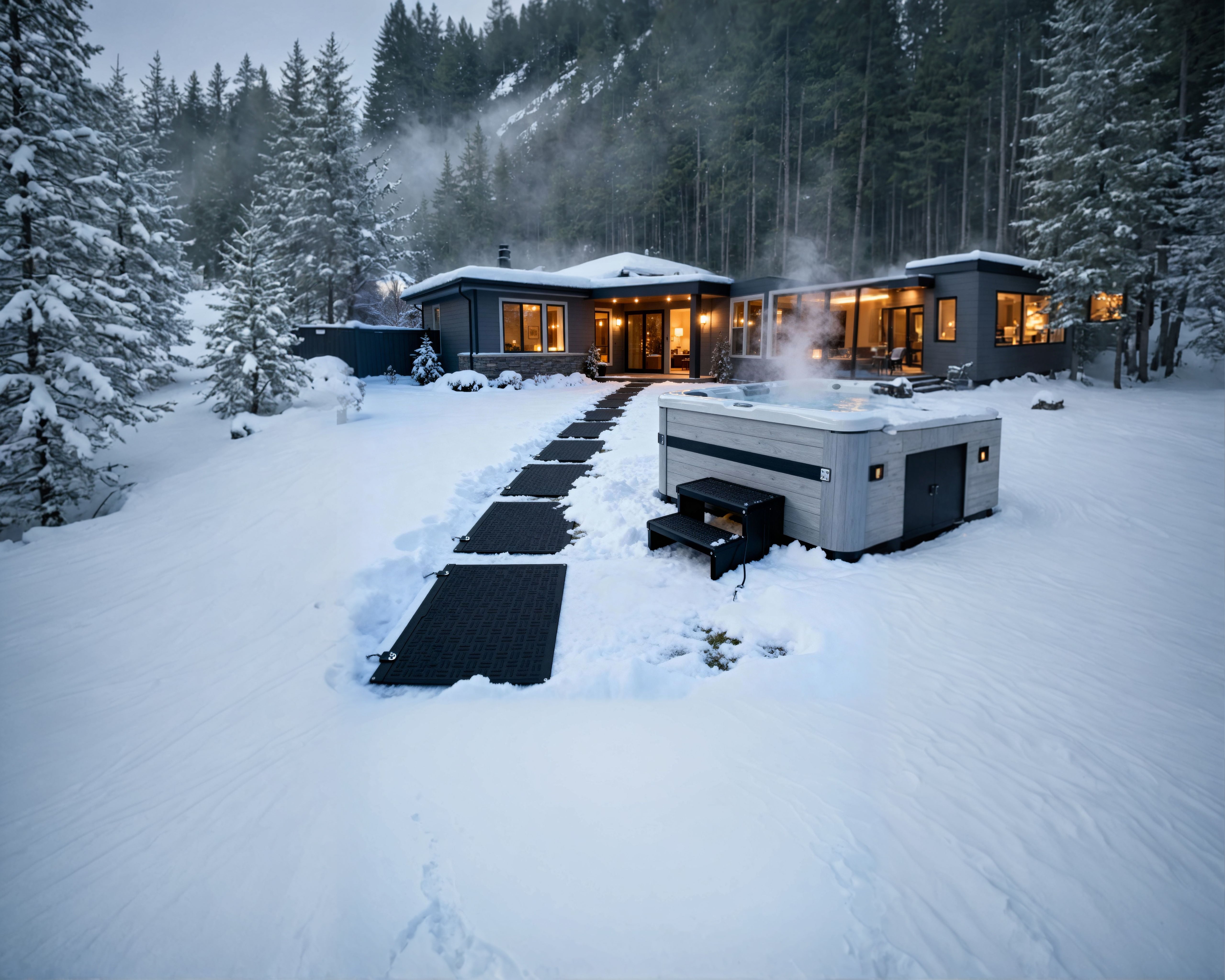
Unlike permanent heating systems, snow melting mats are seasonal and portable. They can be placed when needed and removed when winter ends, making them adaptable without construction.
This flexibility allows property owners to:
-
Focus on high-risk areas
-
Adjust placement as needed
-
Store mats during warmer months
Creating a Safer Winter Environment
Preventing slip-and-fall accidents requires more than occasional maintenance. It requires consistency, predictability, and proactive surface management.
Snow melting mats help create safer winter environments by addressing hazards before they develop. By combining controlled heat with slip-resistant design, they reduce risks across a wide range of winter conditions and property types.
For anyone looking to improve winter safety without constant manual effort, snow melting mats offer a practical, preventive approach to one of winter’s most persistent dangers.

Leave a comment
This site is protected by hCaptcha and the hCaptcha Privacy Policy and Terms of Service apply.