


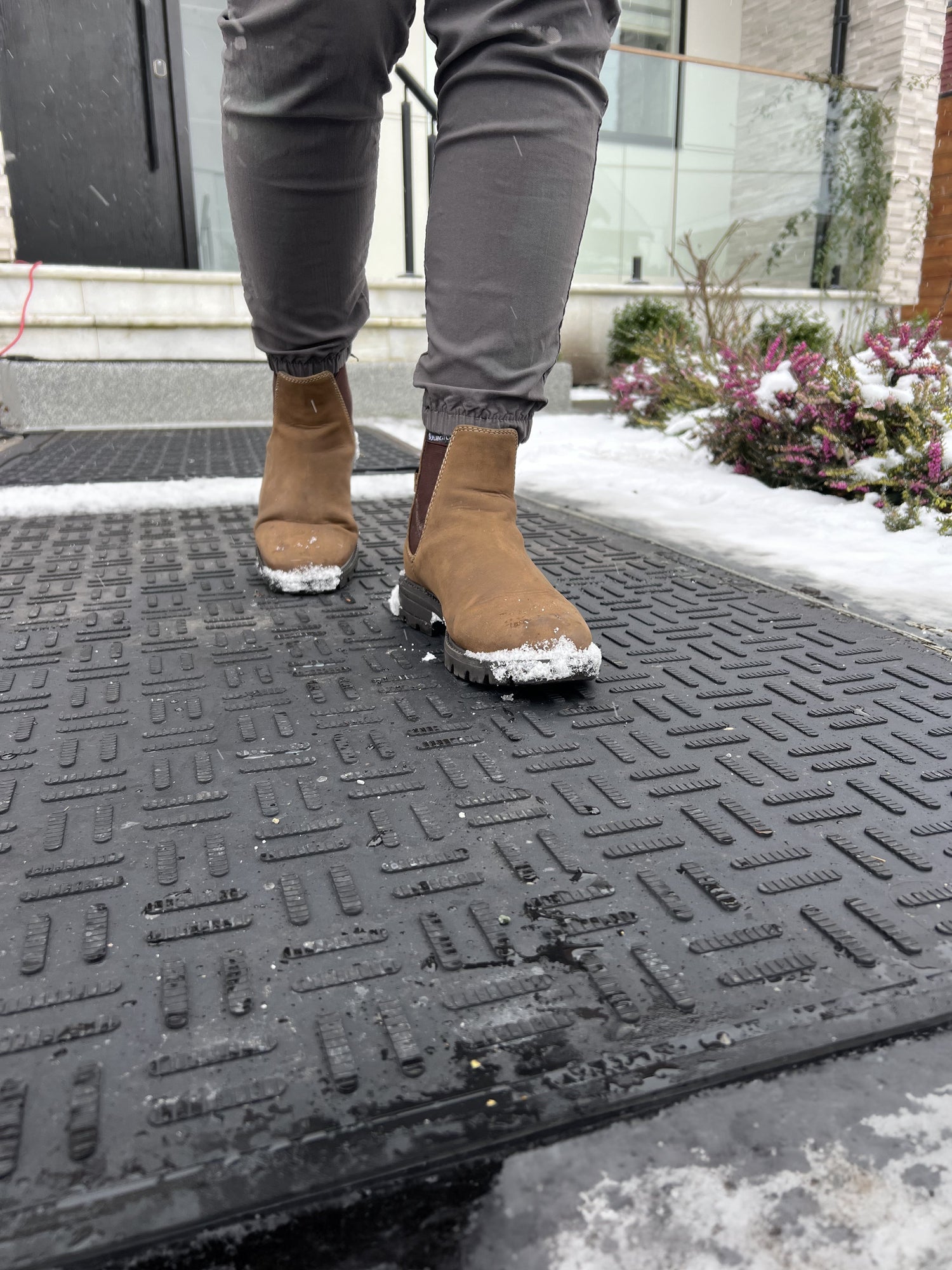
Snow and ice don’t create danger evenly. Certain areas around a property consistently become problem zones every winter, regardless of how often they’re shoveled or salted. Understanding where snow melting mats deliver the greatest impact helps homeowners and facility managers use them strategically rather than treating them as a blanket solution.
HotStep Snow Melting Mats are designed for targeted ice prevention, meaning they work best when placed where snow accumulation, refreezing, and foot traffic intersect. This approach improves safety, reduces maintenance, and minimizes winter-related wear on surfaces.
Entryways: The First and Most Critical Placement
Entryways are the most common location for winter slips and falls. Snow tracked in from outside, combined with melting and refreezing, creates slick conditions that persist throughout the day.
HotStep Snow Melting Mats at entrances help by:
-
Melting snow before it’s carried indoors
-
Preventing ice buildup at thresholds
-
Keeping walking surfaces consistently dry
-
Reducing water and salt tracked inside
Because entrances are used constantly, even small amounts of ice can become hazardous. Snow melting mats work continuously to keep this high-risk area clear.
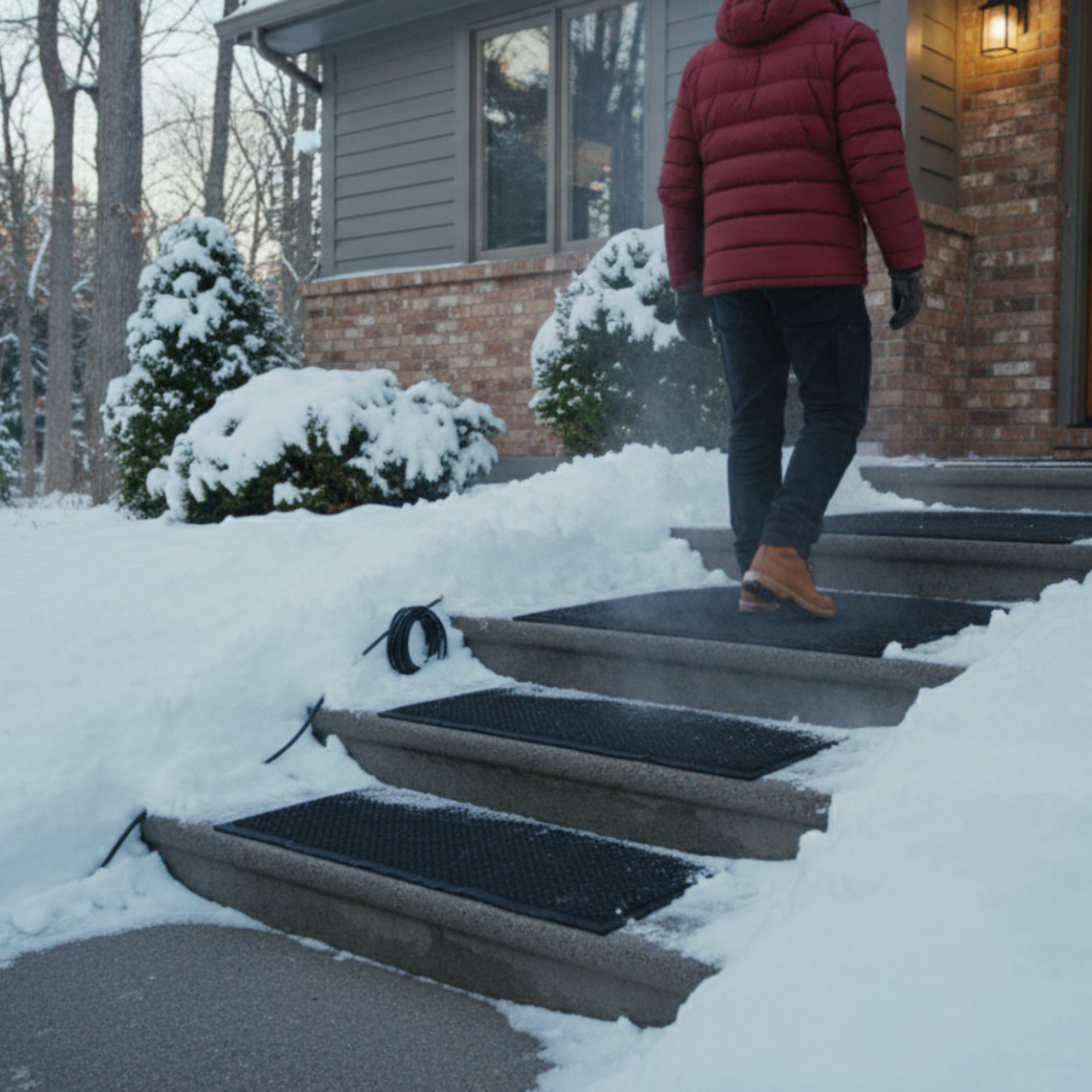
Stairs: Where Ice Becomes Most Dangerous
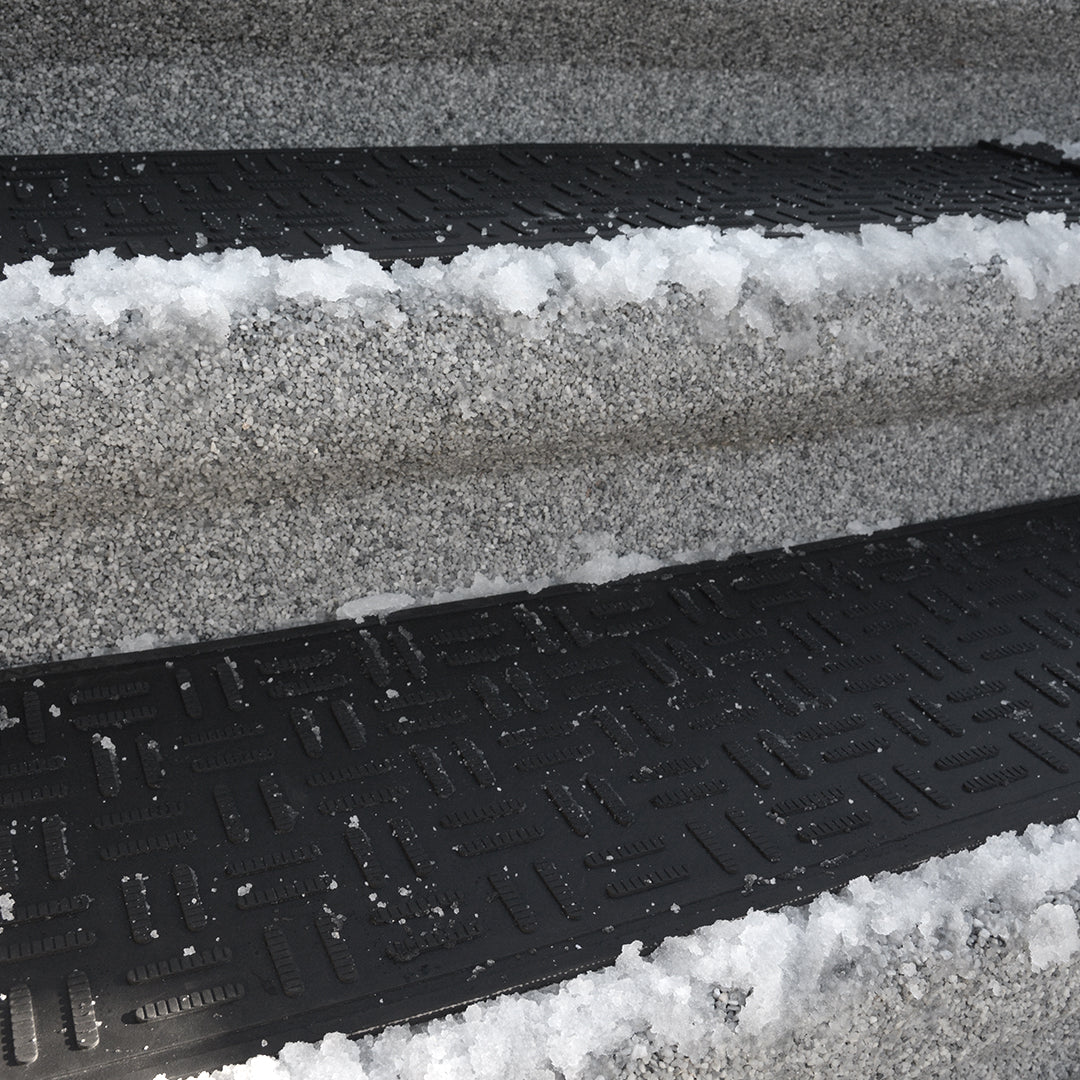
Stairs amplify winter risks more than flat surfaces. Ice on steps reduces traction while increasing the consequences of a slip. Shoveling stairs is also time-consuming and often incomplete.
Placing HotStep mats on stairs:
-
Prevents ice from bonding to step surfaces
-
Maintains consistent traction on each tread
-
Reduces the need for frequent clearing
-
Improves safety during early mornings and evenings
For residential homes and commercial properties alike, heated stair mats address one of the most accident-prone areas during winter.
Walkways and Pathways with Frequent Foot Traffic
Not all walkways need snow melting coverage. The greatest benefit comes from paths that are used daily, especially those connecting entrances, parking areas, and shared spaces.
HotStep Snow Melting Mats are especially effective on:
-
Front walkways
-
Side entrances
-
Paths between buildings
-
High-use access routes
By keeping these areas clear, snow melting mats reduce the need for repeated shoveling and salting while ensuring predictable walking conditions.
Ramps and Accessibility Areas
Ramps require consistent traction year-round, but winter conditions make them especially vulnerable. Ice buildup on ramps creates serious accessibility issues and increases liability risks.
HotStep mats help maintain safe access by:
-
Preventing ice formation on sloped surfaces
-
Supporting steady footing for mobility aids
-
Reducing reliance on abrasive de-icers
-
Maintaining consistent surface temperature
This makes them an effective solution for both residential accessibility ramps and commercial compliance needs.
Decks and Outdoor Living Spaces
Decks often freeze faster than ground-level surfaces due to airflow underneath. Snow may appear manageable during the day, only to refreeze overnight into slick ice.
Using snow melting mats on decks:
-
Prevents ice patches from forming
-
Keeps walking areas usable during winter
-
Reduces damage caused by salt or shovels
-
Protects wood and composite materials
Targeted mat placement allows decks to remain safer without heating the entire surface unnecessarily.
Parking Access Points and Transition Zones
Areas where people step out of vehicles are frequently overlooked but consistently icy. Snow compacts underfoot and refreezes quickly, especially near garages or parking pads.
HotStep mats placed at transition zones:
-
Improve traction where footing changes
-
Reduce slip risk during entry and exit
-
Prevent packed snow from becoming ice
-
Limit salt use near concrete and metal
These small placements often deliver outsized safety benefits.
Why Targeted Placement Works Better Than Full Coverage
Snow melting mats are most effective when used where problems repeat every winter. Rather than covering large areas, focusing on high-risk zones provides:
-
More efficient energy use
-
Faster snow and ice control
-
Lower overall maintenance needs
-
Better long-term performance
HotStep Snow Melting Mats are designed to be modular, allowing property owners to expand coverage gradually based on need.
Planning for Winter Before the First Snowfall
The most effective snow melting setups are planned before winter begins. Identifying problem areas early allows for proper placement and activation timing once snow arrives.
A smart winter plan includes:
-
Observing where ice forms repeatedly
-
Prioritizing safety-critical areas
-
Ensuring proper power access
-
Activating mats early during snowfall
This proactive approach ensures HotStep mats perform at their best throughout the season.
A Smarter Way to Manage Winter Surfaces
Snow and ice management doesn’t have to be reactive. By focusing on the areas where winter conditions create the most risk, HotStep Snow Melting Mats provide a reliable, long-term solution that improves safety without constant intervention.
Used strategically, they help maintain clear, walkable surfaces all winter long — exactly where they’re needed most.


Leave a comment
This site is protected by hCaptcha and the hCaptcha Privacy Policy and Terms of Service apply.